Packaging Requirements
If you have any questions, please reach out to your Account Manager.
Sabamaa offers a poster for your warehouses, an easy-to-implement guide on how to minimise damages!
1. Choose the correct box
In order to ensure safe transit, it is crucial to choose the correct box. The choice depends on the total weight and value/fragility of individual items.
1.1 Parcel shipments – Max. 20 KG (44 LBS) per box
When picking a box size, make sure there is no wasted space. Try to pick the smallest box that meets the weight limit requirements.
If items do not fit in one box, please split the shipment into multiple unmarked/unbranded boxes - but always aim to fit as much as (safely) possible into 1 box.
To validate the quality of packaging, Sabamaa might perform a 90cm (hip-height) drop test on select shipments. All boxes must be able to pass this test.
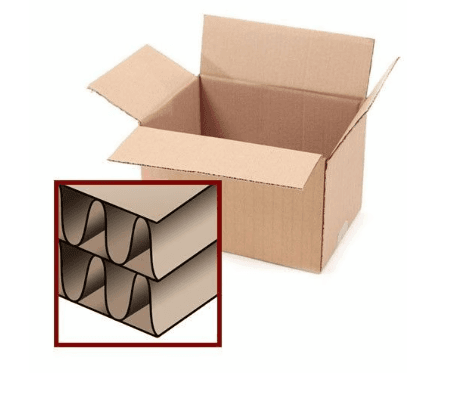
Your box must meet the following criteria:
- Is corrugated
- At least double-walled
- Does not contain any company branding
- Recyclable/Environmentally friendly produced
- It must be able to be opened without destroying the box
1.2 Pallet shipments – Min. 120cm (Height) OR min. 150kg (Weight) per pallet
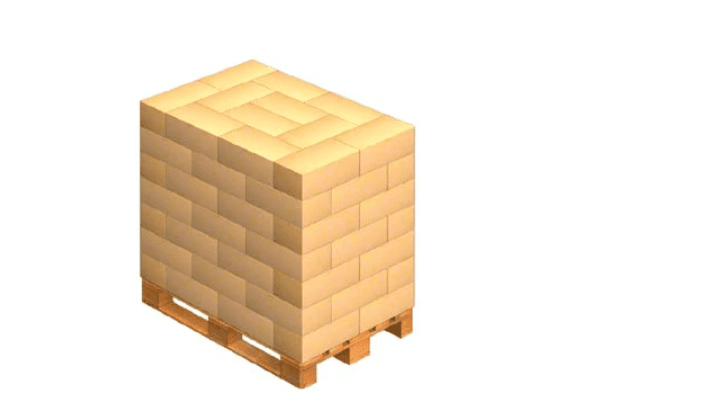
Please stack the boxes onto a standard-sized pallet.Stack the boxes using the staggered stacking method (see image) and wrap the pallet using plastic wrapping to ensure the boxes stay in place. On the outside of the wrapping, attach the necessary labels (see section 4). Each individual box must not exceed a maximum weight of 20 kg (44 lbs).
Please note below the two options for pallet dimensions and note that all of the following requirements in either chosen must be met:
Option 1: Dimensions of 120 cm (Length) x 80 cm (Width) x Minimum 120 cm (Height)
OR
Option 2: Dimensions of 120 cm (Length) x 80 cm (Width) x Minimum 150 kg (Weight)
Maximum Allowed Dimensions:
Please adhere to the following maximum limits for your shipments:
- Maximum Weight: 5000 kg
- Maximum Length: 240 cm
- Maximum Width: 220 cm
- Maximum Height: 220 cm
Failure to comply with the minimum size requirements of pallet shipments may result in financial penalties.
2. Fill in the box
2.1 Inner packaging
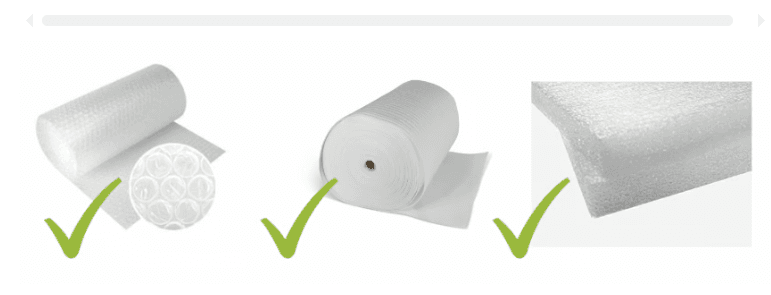
The bottom and the walls of the box should be covered with packaging material. The packaging material should be chosen on the fragility of the products You can use only the approved packaging material (bubble wrap, rolled foam and foam sheets). Never use any other packaging material.
| Material | How to use |
|---|---|
| Bubble wrap | Cover all sides with 3-4 layers of bubble wrap |
| Rolled foam | Fold a piece of foam in 3-4 layers |
| Thick foam sheets (≥1 cm / 0.4 inch) | Cut the foam to the size of the sides and the bottom of the box |
| Foam peanuts | Ensure peanuts are packed to the top of the box and there is no space between |
| Cardboard filling | Ensure cardboard filling are packed to the top of the box and there is no space between |
| Air bags | Place air bags above and within any gaps of the box ensuring all airbags are inflated and unlikely to be pierced during packing or transit |
| Other packaging | You may use other packaging to fill the box as long as the contents arrived undamaged and leaks are contained to the single leaking item |
2.2 Put the items in the box and fill in empty space
Once the bottom and the inner walls of the box are covered with packaging material, you can place individually wrapped items in the box.
Make sure to fill in empty space with packaging material, so the items cannot move inside.
2.3 Add the necessary documentation
Packing slip must be placed on top of the box before closing it.
Never include any other documents unless specified
In case additional documents were requested, place those on top of the box before closing it.
3. Close the box
Follow the table below in order to choose the right method.
| Items packed in | How to close |
|---|---|
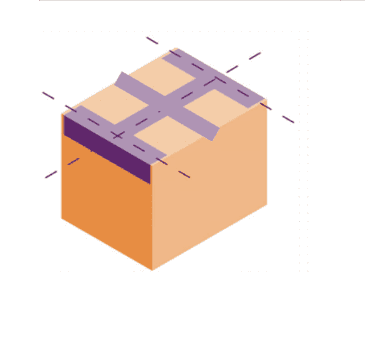
| Box | H-Tape method with additional tape over the middle. |
4. Attach shipping label and necessary (Dangerous Goods) stickers
4.1 Shipping documents
Please attach one shipping label to the left top corner of the box and/ or to the outside of the pallet.
4.2 Marking and Stickers
Stickers for shipping liquids
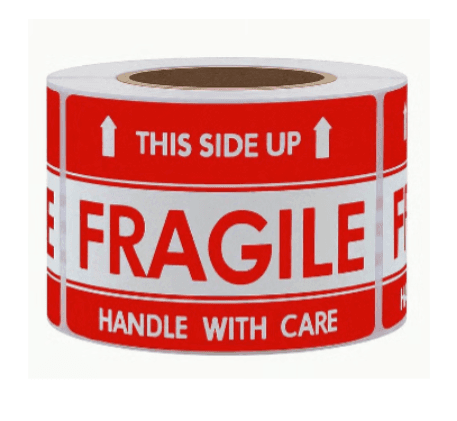
When shipping liquids in parcels, please always add a sticker indicating ‘This side up’, per the image below. This sticker should be placed on two opposite sides on the box.
When shipping Dangerous Goods; the Seller is responsible for adequate packaging, complying with ADR DG regulations; the section below advises best-practices and Sabamaa’s standards. Sabamaa only allows Sellers to ship ADR LQ on its Shipping account, overpacks and non-LQ are prohibited!
When shipping Dangerous Goods in Limited Quantities (LQ), it is mandatory to add the DG LQ logo to the box. Please ensure the logo does not contain any UN numbers, and has a size of 10*10cm.

4.3 Shipment-weight
When shipping dangerous goods, please ensure you do not ship boxes weighing over 20kg’s. Sabamaa only allows Sellers to ship ADR LQ, overpacks and non LQ are prohibited.